Languedoc’s ancient burial sites: Exploring Dolmens and the First People of the Region
Ancient Languedoc burial sites, older than the pyramids of Egypt!
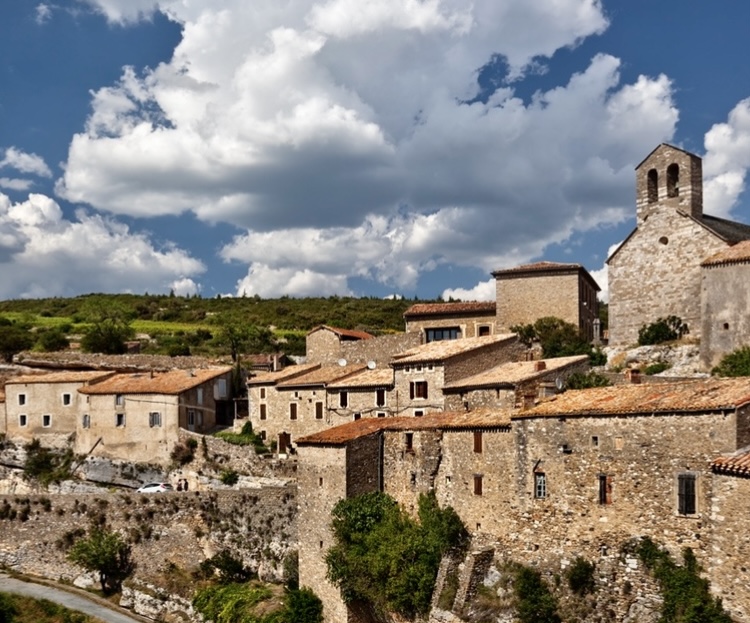
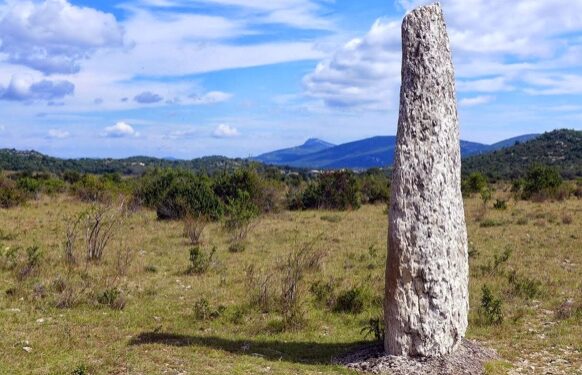
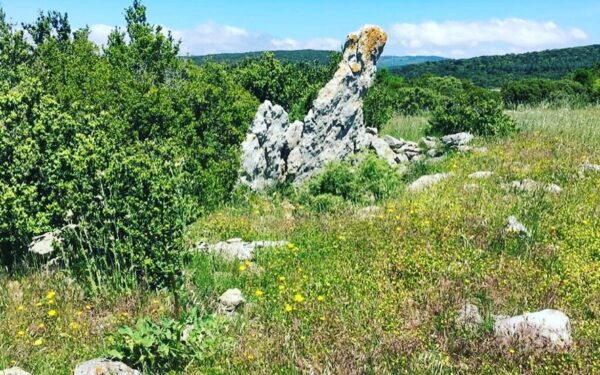
The Languedoc region—stretching from the rugged foothills of the Pyrenees to the sun-soaked Mediterranean—has a history far older than the medieval castles and Roman roads that usually capture visitors’ imaginations. Hidden among limestone plateaus, forested hills, and quiet vineyard paths lie some of Southern France’s oldest human-made structures: prehistoric dolmens, burial mounds, and ceremonial stones dating back up to 5,000 years.
For guests staying at La Souqueto accommodation, these ancient echoes are surprisingly close. The Minervois and Corbières countryside is dotted with mysterious stone tombs that invite exploration, reflection, and a deeper understanding of the region’s earliest inhabitants.
Who Built the Dolmens of the Languedoc?
Long before the Romans, before the Visigoths, and even before the Gauls, the lands around modern-day Occitanie were home to Neolithic farming communities. Around 3500–2500 BCE, these early people began constructing monumental stone structures—dolmens—designed to house their dead and honour their ancestors.
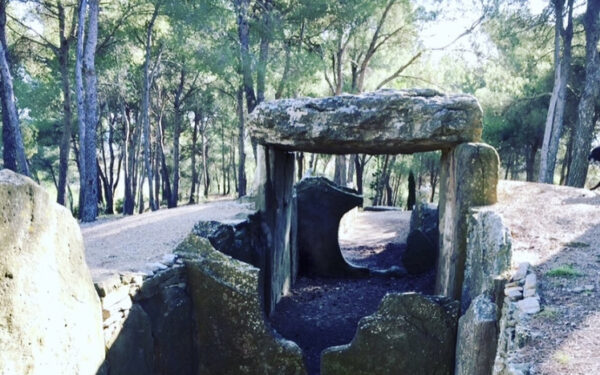
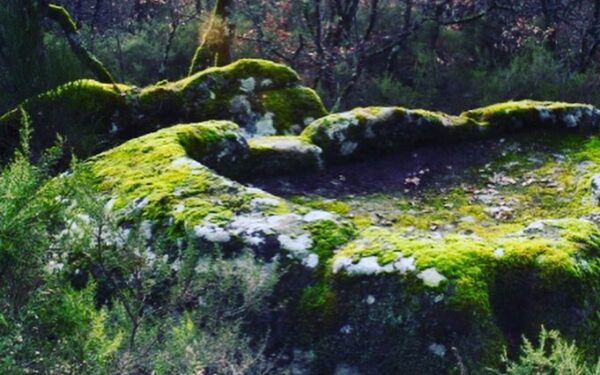
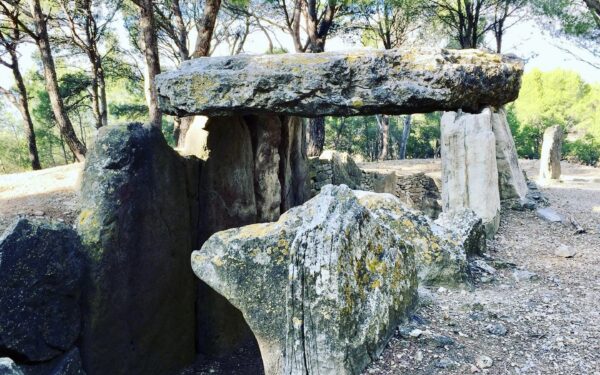
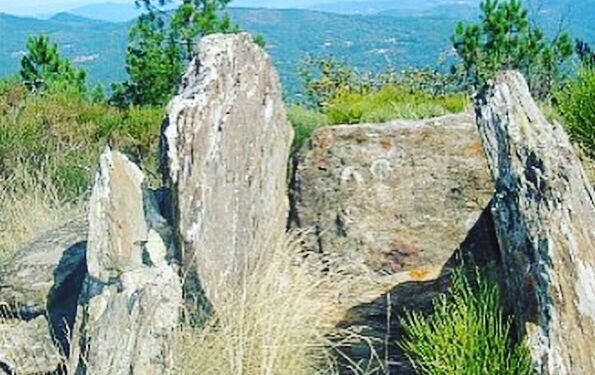
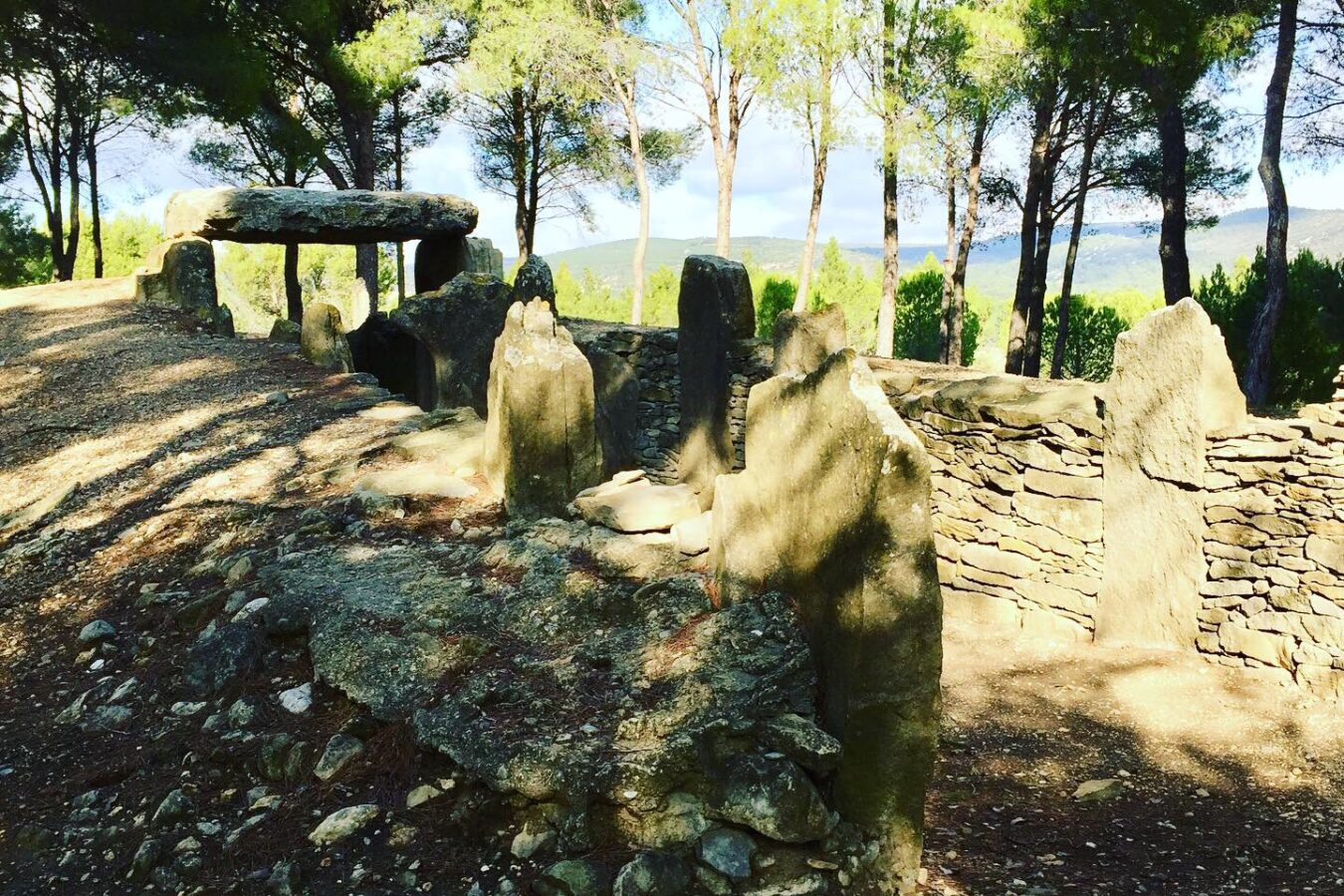
Dolmens were not merely tombs—they were sacred communal places where early Languedocians connected with their ancestors. And, they generally consist of two or more upright stones (orthostats) supporting a massive horizontal capstone. They originally would have been covered by earth or smaller stones to form a tumulus (burial mound), though these coverings have mostly eroded away with time.
These sites served both funerary and ritual purposes. Archaeological finds reveal pottery and decorative objects, flint tools, beads and ornaments as well as the remains of multiple individuals
Notable Dolmens Near La Souqueto accommodation
The Minervois region surrounding La Souqueto is exceptionally rich in prehistoric heritage. Some of the most remarkable sites include:
Dolmen de Fades (Pépieux)
One of the largest and best-preserved dolmens in France, the Fades (“fairies”) Dolmen stretches nearly 24 metres long. Built around 3000 BCE, it features a corridor leading into an inner chamber, once used for successive burials.
This remarkable monument is just a short drive from La Souqueto and makes for a beautiful day outing.
Dolmen de la Jargantière
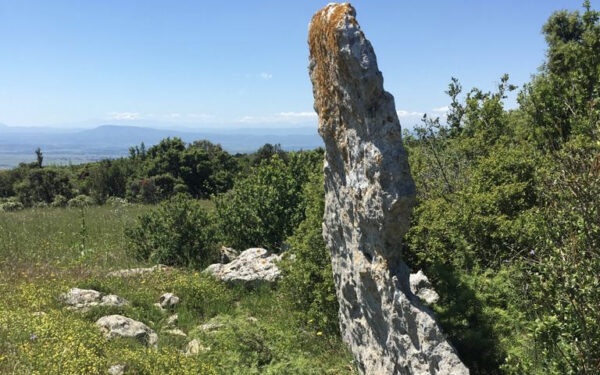
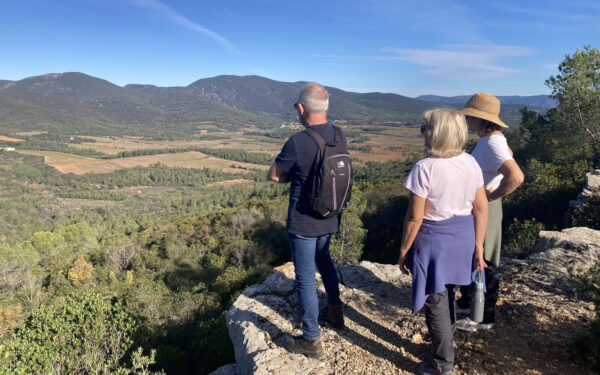
Located on a quiet ridge above the Aude valley, this dolmen offers sweeping views and an atmosphere of complete stillness. It marks the presence of a once-thriving Neolithic farming community that cultivated the surrounding plains.
Dolmen du Palet de Roland
This dolmen, linked with the legend of Roland, Charlemagne’s heroic knight, combines prehistory with medieval folklore. The structure itself predates Charlemagne by thousands of years, but its mythic associations show how deeply rooted these stones are in the cultural imagination of the region.
Why the Languedoc Became a Neolithic Heartland
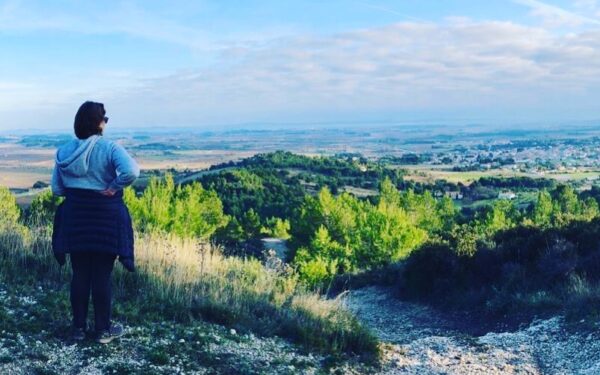
Several natural features made this region ideal for early settlers, sheltering limestone plateaus offering caves and building materials and fertile soils supporting early agriculture. Abundant rivers, including the Aude, Orb, and Cesse were also crucial to the survival of early settlers as was the natural trade routes through the Pyrenean foothills. These factors produced one of the oldest continuous human landscapes in Western Europe—one you can still walk through today.
Visiting Dolmens Today
Most dolmens in the Languedoc are freely accessible. We have access to a website that clearly marks some of the most impressive burial sites. When visiting, please remember to stay on marked paths, avoid climbing on ancient stones, treat sites with respect—they are older than the pyramids of Egypt
A Timeless Experience from La Souqueto accommodation.
Exploring prehistoric dolmens adds a unique dimension to your stay at La Souqueto accommodation—one that connects you not just to the landscape, but to the people who shaped it thousands of years ago. Whether you’re a history enthusiast, a curious walker, or simply seeking a beautiful place to wander, these ancient monuments offer a rare chance to stand inside humanity’s deep past.
Visit the Languedoc’s ancient burial sites and stay at La Souqueto Accommodation http://www.lasouqueto.com